
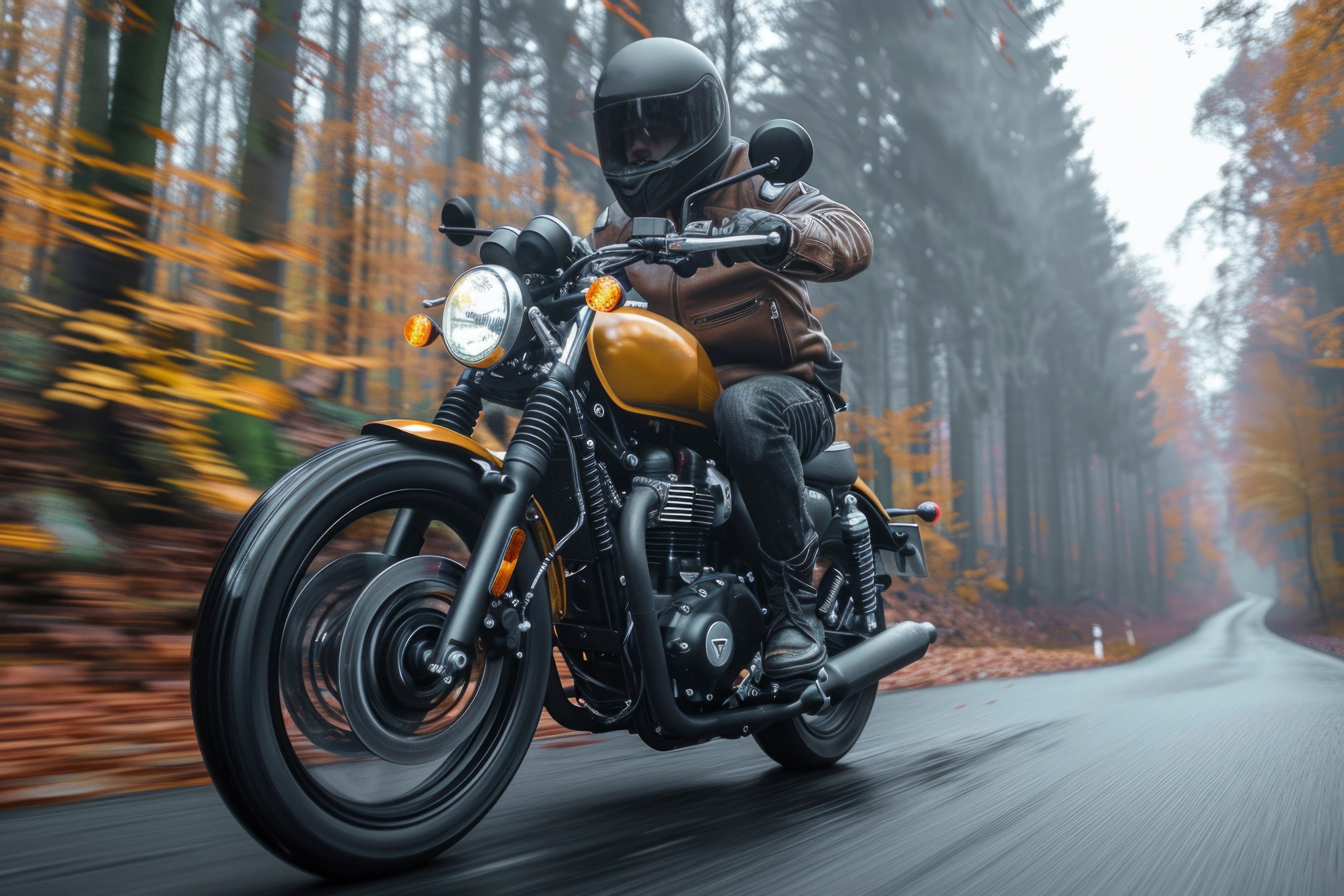
The Physics of a Crash: What Happens to Your Body at 60 km/h?
Why speed, mass, and sudden stopping turn a simple fall into a life threatening event.
Opening Hook
Sixty kilometers per hour does not feel fast on a motorcycle. Most riders cruise at that speed every single day without a second thought. But in a crash, 60 km per hour is more than enough to cause severe and irreversible injury. To understand why safety gear matters, you first need to understand what actually happens to the human body during impact.
1. Speed Is Not the Enemy. Sudden Stopping Is.
When you ride at 60 km per hour, your body is moving at the same speed as the motorcycle. The danger appears when something forces your body to stop instantly while your internal organs keep moving.
This is basic physics.
Your motorcycle might stop in a fraction of a second. Your body does not.
What the physics says
- At 60 km per hour, your body travels about 16.6 meters per second
- When a crash happens, stopping distance drops to a few centimeters
- This creates massive deceleration forces on the body
The shorter the stopping distance, the higher the force transferred to your bones and organs.
Key takeaway: Injuries are caused by how fast your body stops, not how fast you were riding.
2. Your Body Keeps Moving Even After Impact
In a crash, different parts of your body stop at different times.
Your skin might stop first when it hits the road. Your bones stop next. Your internal organs keep moving for milliseconds longer.
This delay is what causes internal damage.
What happens inside your body
- The chest compresses rapidly
- The ribs bend inward
- Organs collide with the rib cage
- The spine experiences sudden compression
- The neck snaps forward or backward
Even at 60 km per hour, this chain reaction can result in:
- Rib fractures
- Lung bruising
- Liver or spleen damage
- Spinal disc injury
- Severe neck trauma
This is why many serious injuries occur without visible external damage.
Key takeaway: The most dangerous injuries are often invisible.
3. Why Armor Alone Is Not Enough at 60 km per hour
Traditional riding jackets use hard or foam armor. These materials spread impact slightly, but they do not significantly slow down the body.
At 60 km per hour:
- Foam compresses fully almost instantly
- Hard armor transfers force around, not away
- Impact energy still reaches bones and organs
Think of it like jumping onto concrete with knee pads. Your knees might survive, but the shock still travels through your body.
What real protection needs to do
- Increase stopping distance
- Absorb energy over time
- Reduce peak force
This is where airbag systems change the equation.
Key takeaway: Protection must manage energy, not just block it.
4. How an Airbag Changes the Physics of a Crash
An airbag jacket inflates in 60 to 100 milliseconds, before your body hits the ground or another object.
This does three critical things:
- Increases the stopping distance
- Absorbs energy over a larger surface area
- Reduces the peak force on the chest, spine, and neck
Instead of stopping over a few centimeters, your body decelerates over a much larger cushion of air.
What this achieves
- Lower chest compression
- Reduced spinal load
- Controlled neck movement
- Less force transmitted to organs
This is why airbag systems show:
- More than 55 percent reduction in chest impact force
- More than 80 percent reduction in neck hyperextension
Key takeaway: Airbags work by changing physics in your favor.
5. Why 60 km per hour Is a Critical Threshold
Most riders assume serious injuries only happen at highway speeds. The reality is very different.
In India:
- Most accidents occur under 60 km per hour
- Many happen within city limits
- Traffic obstacles cause sudden stops
At this speed, the body experiences enough force to cause life threatening trauma if impact is unmanaged.
You do not need extreme speed to suffer extreme injury.
Key takeaway: Everyday riding speeds are dangerous without proper impact protection.
Conclusion
At 60 km per hour, a motorcycle crash is not just a fall. It is a physics event where energy, mass, and sudden deceleration collide inside your body.
Regular jackets protect your skin. Advanced safety systems protect your organs, spine, and life.
Understanding the physics makes one thing clear. The goal of safety gear is not comfort or style. It is to control how your body absorbs energy when things go wrong.
What to Do Next
If you want gear designed to manage real world crash forces, explore airbag protection built for Indian riding conditions.
👉 Learn more about RideShield Pro here
Related Articles:
Ready to Upgrade Your Safety?
Pre-order the RideShield Pro and experience next-generation rider protection designed for Indian roads.
Pre-Order Now